
Academic publishing is undergoing a quiet but decisive transformation. What was once a slow, highly gatekept ecosystem is steadily evolving into a more dynamic, accessible, and technology-driven space. Over the next decade, academic journals will not only change how research is disseminated but also how it is created, evaluated, and consumed.
Here are some key trends likely to define the future of academic journals.
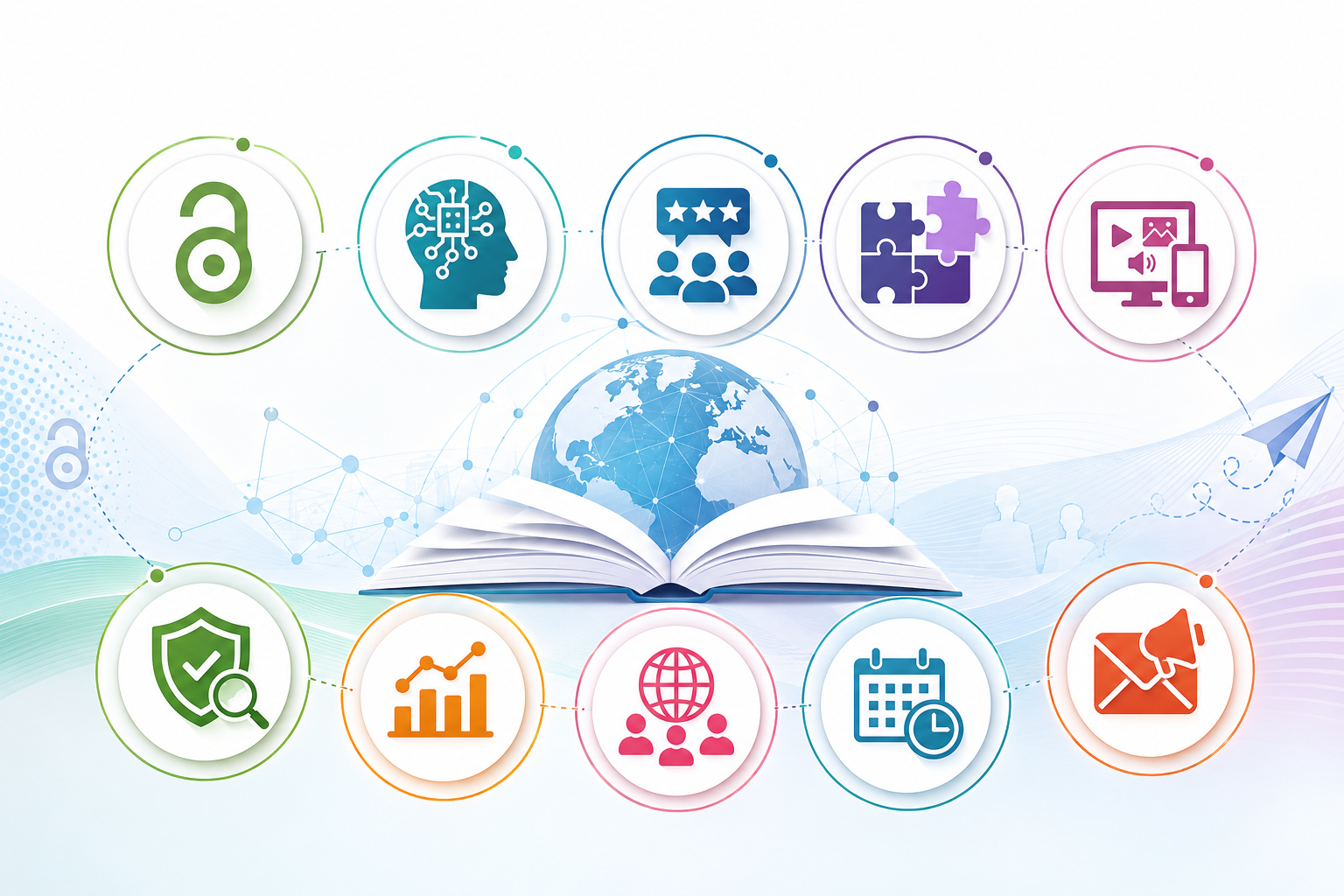
1. Open Access Becoming the Norm
The push for open access is no longer a fringe movement. Governments, institutions, and funding bodies are increasingly mandating that publicly funded research be freely available. As a result, subscription-based models may gradually decline, giving way to more equitable systems where knowledge is accessible to a global audience without financial barriers.
However, this shift will also raise questions about publication costs, author fees, and the sustainability of journal operations. Hybrid models and institutional funding frameworks are likely to play a crucial role in balancing accessibility with viability.
2. Integration of Artificial Intelligence. Artificial intelligence is already reshaping editorial workflows. From automated plagiarism detection to AI-assisted peer review and language refinement, the efficiency of the publication process is improving significantly.
In the coming years, AI may also assist in identifying suitable reviewers, predicting research impact, and even summarising complex findings for broader audiences. That said, ethical considerations around bias, transparency, and authorship will need careful regulation.
3. Evolution of Peer Review. Traditional peer review, while foundational, has long been criticised for its opacity and delays. Emerging models such as open peer review, post-publication review, and collaborative review processes are gaining traction.
These approaches aim to make the evaluation process more transparent, accountable, and constructive. Over time, peer review may shift from being a gatekeeping mechanism to a more continuous and community-driven form of scholarly dialogue.
4. Rise of Interdisciplinary Research. Complex global challenges such as climate change, public health, and technological ethics cannot be addressed within the confines of a single discipline. Academic journals are increasingly recognising the value of interdisciplinary work.
Future journals may be structured less around rigid subject boundaries and more around themes, problems, or research questions. This shift will encourage collaboration and foster more holistic approaches to knowledge creation.
5. Digital-First and Multimedia Publishing. The traditional static PDF is gradually giving way to more interactive formats. Journals are beginning to incorporate multimedia elements such as video abstracts, data visualisations, and interactive figures.
This digital-first approach enhances reader engagement and makes research more accessible, especially for non-specialist audiences. It also allows for better representation of complex data and methodologies.
6. Emphasis on Research Transparency and Reproducibility. Concerns about reproducibility have prompted journals to adopt stricter policies around data sharing, methodology disclosure, and pre-registration of studies.
In the future, journals may require authors to submit datasets, code, and detailed protocols alongside their manuscripts. This will not only strengthen the credibility of published work but also facilitate further research and collaboration.
7. Alternative Metrics and Impact Measures. The traditional reliance on impact factors is increasingly being questioned. Alternative metrics, often referred to as altmetrics, are gaining importance. These include social media engagement, policy influence, and public outreach.
Academic journals will likely adopt more nuanced ways of assessing impact, recognising that the value of research extends beyond citations alone.
8. Greater Inclusivity and Global Representation. Efforts are being made to diversify editorial boards, reviewer pools, and author communities. Journals are becoming more conscious of linguistic, geographic, and institutional biases.
In the coming decade, we can expect more inclusive practices that amplify voices from underrepresented regions and disciplines, making academic publishing truly global.
9. Continuous Publishing Models. Instead of waiting for complete issues, many journals are moving towards continuous publishing, where articles are released as soon as they are ready.
This model reduces delays and ensures that research findings are disseminated more rapidly. It also aligns with the fast-paced nature of contemporary research environments.
10. Evolving Submission and Outreach Practices. The way journals attract submissions is also changing. A modern journal call for paper is no longer limited to static announcements. Instead, it often involves targeted digital campaigns, social media engagement, and collaborations with academic communities.
This shift reflects a broader trend towards making academic publishing more interactive and responsive to researchers’ needs.
The future of academic journals lies at the intersection of accessibility, technology, and inclusivity. While the core mission of advancing knowledge remains unchanged, the methods and structures that support it are rapidly evolving.
As these trends continue to unfold, academic publishing will likely become more transparent, collaborative, and impactful. For researchers, editors, and readers alike, the next decade promises not just change, but a reimagining of how knowledge is shared with the world.